A bowl of pasta can look wonderfully simple, yet the choice between fresh and dried changes almost everything: the bite, the sauce, the cooking time and the feeling of the dish. Fresh pasta vs dried pasta is not really a contest with one winner. In an Italian kitchen, both have their place, and knowing when to choose each is the difference between a good supper and a truly memorable plate.
Fresh pasta brings softness, delicacy and a certain generosity to the table. Dried pasta brings structure, patience and the satisfying chew Italians call al dente. The best choice begins with the sauce you want to eat.
Fresh pasta vs dried pasta: the essential difference
Fresh pasta is usually made with flour and eggs, then rolled, cut or shaped before cooking. Depending on the region and recipe, it may contain semolina, water, spinach, squid ink or other ingredients, but its defining quality is moisture. It is tender before it ever reaches the pan, and it cooks quickly.
Dried pasta is made to keep. Typically formed from durum wheat semolina and water, it is slowly dried until shelf-stable. That drying process gives it a firmer structure, allowing it to withstand longer cooking and heartier sauces. It is the dependable pasta in the cupboard, ready whenever a proper bowl of spaghetti or rigatoni is calling.
Neither is more authentic than the other. Italy has always made both. Fresh egg pasta is closely associated with northern and central regions such as Emilia-Romagna, while many southern traditions celebrate dried semolina pasta in all its wonderfully varied shapes.
Why fresh pasta feels so special
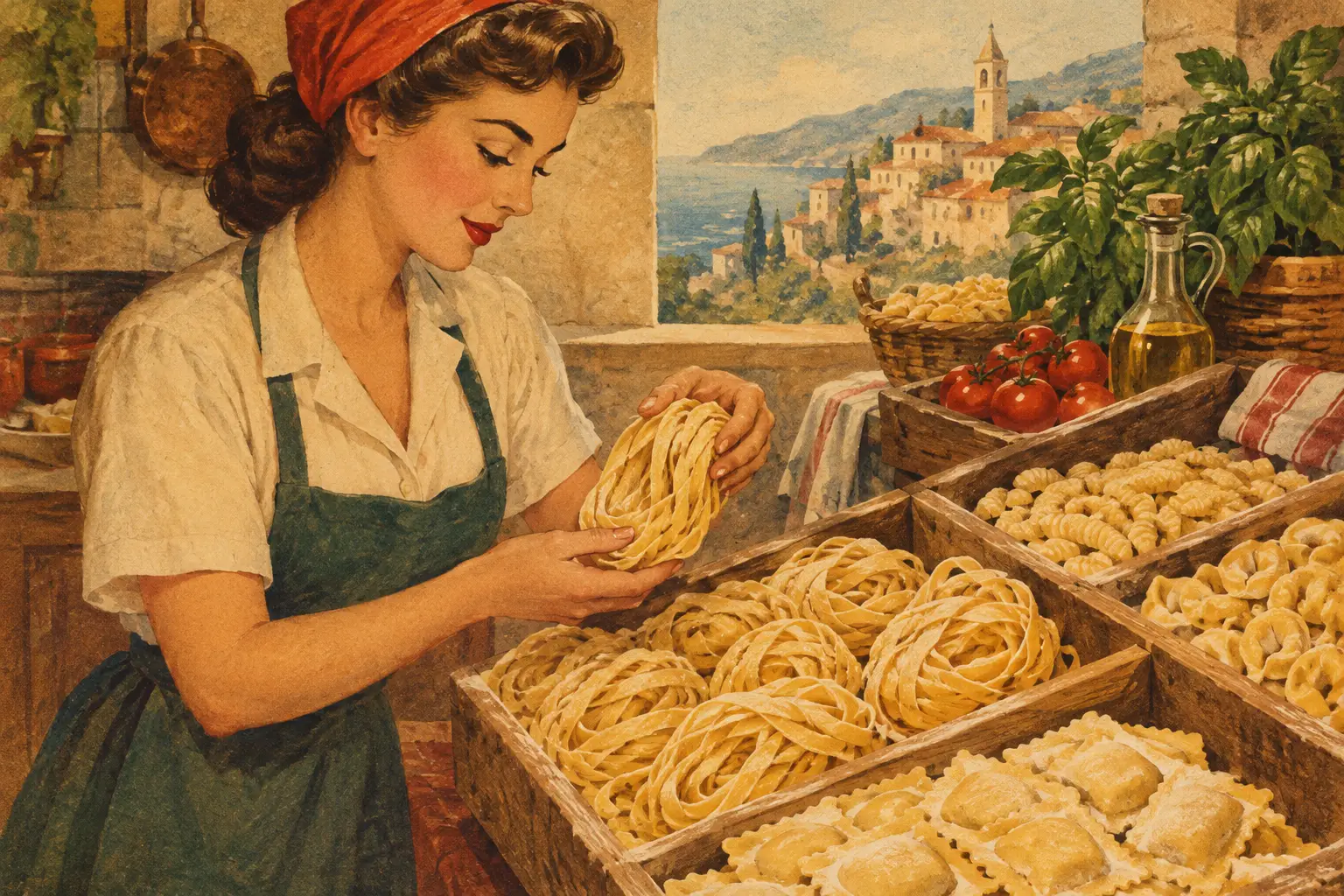
There is a lovely immediacy to fresh pasta. The dough is supple, the cut edges are soft, and the flavour has a gentle richness from the egg. A ribbon of tagliatelle or a filled raviolo carries sauce differently from its dried equivalent: it feels more tender, more delicate and often more luxurious.
Fresh pasta is particularly good with sauces that do not overpower it. Think silky butter and sage, a slow-cooked ragù served with pappardelle, mushrooms with a little cream, or a simple tomato sauce made with ripe tomatoes and good olive oil. Its surface is naturally welcoming to sauce, but its soft texture can be lost under anything too aggressive or overly reduced.
Filled pasta belongs firmly in the fresh camp. Ravioli, tortelli and agnolotti are as much about the filling as the dough around it. Ricotta and spinach, pumpkin, potato, braised meat or seasonal vegetables need that tender envelope and brief cooking time. The joy is in the contrast: a fine layer of pasta, then a warm, flavourful centre.
Fresh pasta also asks for attention. It can cook in two or three minutes, sometimes less. Walk away to answer the door and it may go from beautifully tender to overly soft before the water comes back to a proper boil. That is not a fault, simply part of its character.
The sauces that suit fresh pasta
Fresh pasta is at its best when the sauce is made with care and served without delay. Broad ribbons work beautifully with ragù because there is enough surface area for the sauce to cling to. Delicate filled pasta needs less: melted butter, herbs, a little stock or a light tomato sauce can be enough.
For a special supper, fresh pasta has an occasion about it. It is the choice for a long lunch with wine, a date night, or a table of friends who understand that the best meals do not need to be rushed.
The lasting appeal of dried pasta
Dried pasta earns its place through texture. Good-quality dried pasta made from durum wheat has a firm, resilient bite that is difficult to imitate. It holds together in the pan, keeps its shape in generous sauces and brings a little resistance to every forkful.
It is also extraordinarily versatile. Spaghetti, linguine, penne, rigatoni, orecchiette, fusilli and conchiglie each offer a different way to catch sauce. The ridges of rigatoni hold a rich meat sauce. Orecchiette cup small pieces of sausage, broccoli or greens. Long spaghetti is made for a glossy sauce of tomatoes, garlic and chilli, or for the restrained pleasure of cacio e pepe.
Dried pasta is not merely a convenience food, despite being convenient. When cooked properly, it is the foundation of many of Italy’s most loved everyday dishes. Its simplicity is precisely the point.
The sauces that suit dried pasta
Choose dried pasta when you want a sauce with body, a pronounced texture or a longer cooking time. It stands up well to slow-simmered tomato sauces, robust ragù, chickpeas, lentils, anchovies, chilli and plenty of grated cheese. Tubes and ridged shapes are especially good for sauces with small pieces of vegetables or meat.
Dried pasta also gives you a little more breathing room. It generally takes eight to twelve minutes to cook, depending on the shape and brand. That makes it practical for a midweek supper, while still being capable of a very serious plate of food.
Texture matters more than freshness
The word “fresh” can make it sound as though fresh pasta must automatically be better. But better for what? If you are making a rich ragù and want a soft, eggy tagliatelle, fresh pasta may be exactly right. If you are making a punchy tomato sauce for spaghetti and want that classic firm bite, dried pasta is the better decision.
The mistake is to treat all pasta as interchangeable. A fragile fresh ravioli and a dried rigatoni are not competing versions of the same thing. They are different ingredients, with different jobs to do.
This is also why shape matters. A smooth sauce can coat long strands. A chunky sauce needs curves, ridges or hollows to carry it. A filled pasta needs room to be the centre of attention. Start with the sauce, then choose the pasta that gives it the best home.
How to cook each one well
For both fresh and dried pasta, use plenty of generously salted water. The water should taste pleasantly seasoned, because this is your best chance to season the pasta itself. Add the pasta only once the water is boiling enthusiastically, and stir soon after it goes in so that it does not stick.
With dried pasta, begin tasting a minute or two before the packet suggests. You are looking for a cooked centre with a little resistance, not hardness. Save a cup of the starchy cooking water before draining. A splash in the pan helps sauce coat the pasta rather than sit beside it.
With fresh pasta, stay close. Give it a gentle stir, then test it almost immediately. Lift it straight into the sauce with tongs or a slotted spoon, carrying a little of the cooking water with it. Fresh pasta benefits from a short final toss in the pan, just long enough for sauce and pasta to become one.
Do not rinse either fresh or dried pasta after cooking. That washes away the starch which helps sauce cling. And do not leave pasta waiting in a colander while the sauce is finished. Sauce should be waiting for pasta, not the other way round.
Choosing pasta for the moment
A packet of excellent dried pasta is one of the most useful things to keep at home. It makes a quick, comforting meal possible with little more than garlic, tomatoes, olive oil and cheese. It is economical, reliable and deeply satisfying when treated with respect.
Fresh pasta is worth choosing when you want tenderness, a seasonal filling or a little ceremony. It can turn a quiet dinner into something more generous, especially when paired with a bottle of wine and eaten slowly. It does not need a complicated sauce to feel special.
At L’assaggino, the pleasure of freshly made pasta is part of how we welcome people to the table. But the spirit behind it matters just as much: choose good ingredients, cook them carefully and share them with people you like.
The next time you are deciding between fresh pasta and dried, let the sauce lead the way. A well-chosen shape, a properly seasoned pan and a few unhurried minutes at the table will do the rest.