A forkful of properly made pasta should feel alive: tender rather than soft, satisfying without being heavy, and ready to carry every last bit of sauce. This fresh pasta guide is for anyone who has wondered why one bowl can feel comforting and memorable while another is simply filling. The answer is rarely one grand secret. It is care with the dough, respect for the ingredients, and the good Italian sense to pair the right shape with the right sauce.
Fresh pasta is humble food, but that does not mean it is casual to make. Flour, eggs, water and a little time can become something beautiful when handled well. At the table, that simplicity leaves room for the flavours that matter: ripe tomatoes, slow-cooked ragù, peppery olive oil, aged cheese, bright herbs or a glass of wine shared with friends.
What makes fresh pasta so special?
Fresh pasta begins with a dough that is mixed, rested, rolled and cut close to the moment it is cooked. Unlike dried pasta, which is designed for a long shelf life, it retains more moisture. That gives it a softer bite and a delicate, almost silky texture.
Egg-rich doughs are especially lovely with butter, sage, mushrooms, truffle and slow braises, because their gentle richness welcomes fuller flavours. Pasta made with flour and water alone can have a pleasingly firmer character, particularly in southern Italian traditions. Neither is automatically better. The recipe should suit the dish, the season and the regional spirit behind it.
Fresh pasta also cooks very quickly. A minute too long in the water can take it from tender to overly soft, so timing matters. The best result has a little resistance at the centre, even when the exterior is beautifully supple. Italians call this al dente, but it is less a fixed rule than a feeling: pasta should have character when you bite it.
The fresh pasta guide to dough and texture
A good dough is not made by rushing. Flour needs time to absorb the egg or water, and gluten needs time to relax after kneading. This is why resting the dough is so important. Without it, the dough springs back as it is rolled and can become tough. With a proper rest, it becomes smooth, pliable and easier to shape.
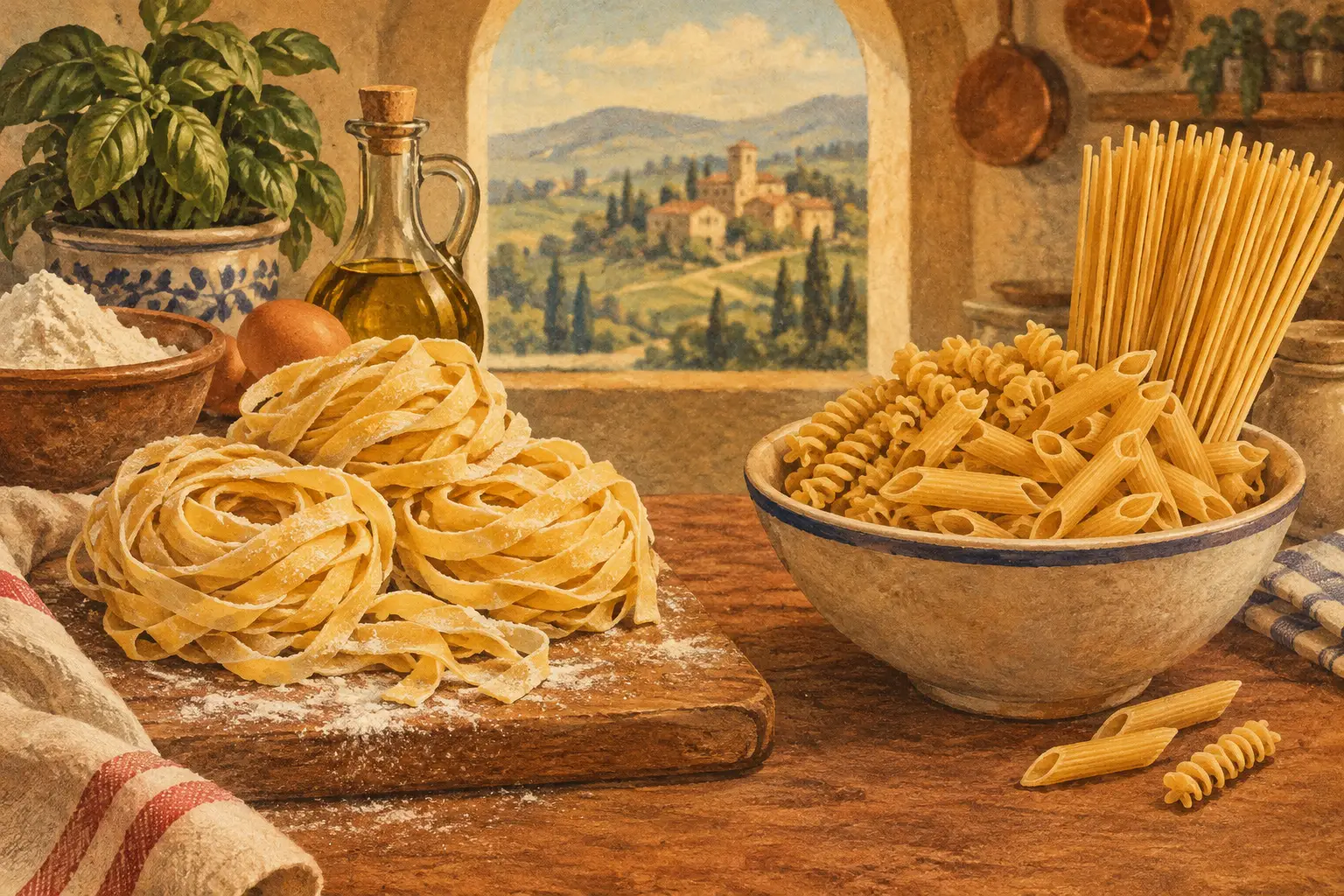
The flour matters too. Finely milled Italian flour creates a soft, even dough, while semolina brings more golden colour and a little extra bite. Many kitchens use a blend, balancing tenderness with structure. Eggs add richness and colour, though their size, freshness and yolk content can change the dough from one day to the next. That is part of cooking with real ingredients rather than a factory formula.
Humidity, room temperature and the particular flour all affect how much liquid a dough needs. A cook may add a touch more flour on a damp day or a few drops of water when the dough feels dry. This is not inconsistency. It is attention.
When the dough is rolled, thickness is as important as the ingredients. Tagliatelle should be thin enough to twist gracefully around a fork, but not so thin that it loses its presence beneath a ragù. Ravioli needs a delicate wrapper, yet one strong enough to hold a generous filling. Fresh pasta is at its best when that balance is felt rather than forced.
Shapes are chosen for a reason
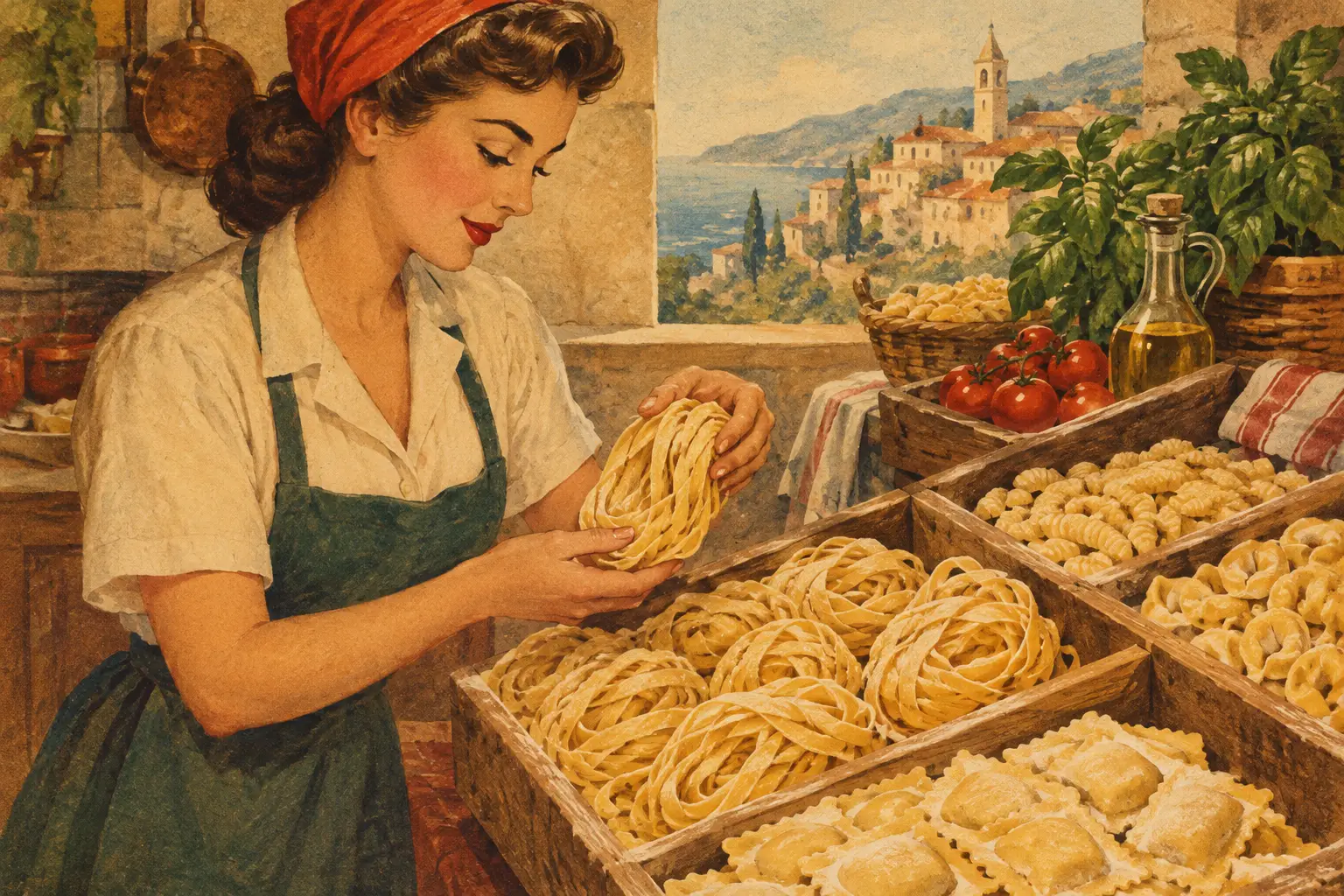
Pasta shapes are not merely decorative. Each one has a job at the table. Long ribbons such as tagliatelle and pappardelle suit sauces that cling and coat, especially ragù made with beef, pork, wild boar or seasonal mushrooms. Their broad surface gives the sauce somewhere to settle.
Small filled pasta, from ravioli to agnolotti, creates a different experience. The filling becomes part of every bite, so the sauce should support it rather than compete with it. Ricotta and spinach may need only melted butter, sage and a dusting of cheese. A rich meat filling can be lifted by a simple roasting jus or a little tomato.
Then there are the shapes made to gather sauce in their folds and hollows. Sardinian malloreddus, for example, have ridges that catch a hearty sauce beautifully. Orecchiette hold tiny pieces of sausage, broccoli, anchovy or chilli in their cup-like centres. The most successful pasta dishes make this practical relationship look effortless.
A sauce that is too thin can slide away from broad ribbons. A heavy ragù can overwhelm fine strands. These are not strict laws, and a good cook may happily break them, but they explain why classic pairings have lasted. They work because generations of Italian kitchens have cooked, tasted and adjusted them.
Sauce should finish the pasta, not drown it
The pot of boiling water is only the first stage. Fresh pasta is usually finished in the pan with its sauce, where a splash of cooking water helps everything come together. That cloudy water carries starch, giving the sauce a glossy texture that clings rather than pools at the bottom of the bowl.
This is where restraint earns its place. A fresh tomato sauce needs sweetness, acidity, olive oil and seasoning, not a long list of additions. A ragu needs patience, allowing the meat and vegetables to soften into one another over time. With a lemony sauce or seafood, freshness is the point, so the pasta should arrive quickly and be eaten while the aromas are at their brightest.
Cheese deserves the same care. Pecorino brings salt and savoury depth; Parmigiano Reggiano offers nuttiness and sweetness. Both can transform a simple dish, but too much can hide the flavour of the pasta itself. The aim is generosity, not excess.
Fresh pasta changes with the seasons
One of the pleasures of eating at an independent Italian restaurant is seeing pasta respond to the market. In colder months, you might want pappardelle with a slow-cooked ragù, ravioli filled with pumpkin, or a sauce enriched with porcini. As spring arrives, peas, broad beans, asparagus and fresh herbs bring lighter colours and cleaner flavours.
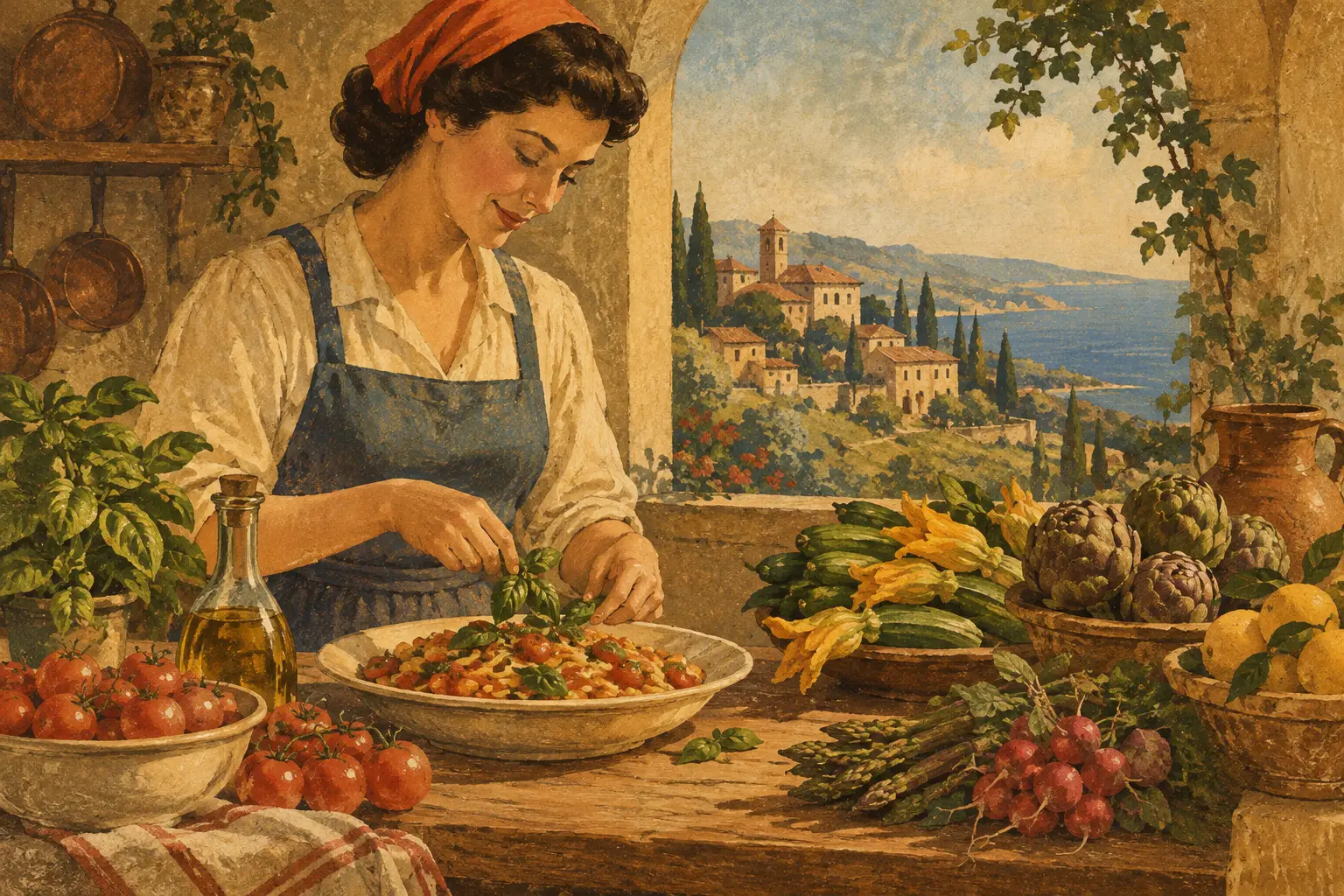
Summer calls for ripe tomatoes, courgettes, basil and seafood, often with sauces that are quick to cook and generous with olive oil. In autumn, squash, chestnuts, game and mushrooms lend themselves to more earthy plates. Seasonal cooking is not about making food complicated. It is about allowing an ingredient to taste like itself at the moment it tastes best.
That approach also explains why a favourite dish may not always appear in exactly the same form. The best kitchens adapt. A sauce may change slightly because the tomatoes are sweeter, the mushrooms are more fragrant or a particular herb has arrived in fine condition. For diners, that is part of the pleasure: a reason to return and see what is cooking.
How to enjoy fresh pasta at its best
Fresh pasta does not need ceremony, but it does deserve to be eaten promptly. It is made for the moment it reaches the table, when the sauce is hot, the texture is just right and the room is full of conversation. Take a moment to notice the shape, the aroma and how the sauce sits on the pasta before the first forkful.
Choose wine by the whole dish, not simply by the colour of the sauce. A bright white can be excellent with seafood pasta, lemon, herbs or delicate vegetables. A medium-bodied red may suit a tomato-based ragù, while a fuller red can stand up to braised meats and mushrooms. If you are unsure, a carafe shared between the table is often the most convivial answer.
At L’assaggino, freshly made pasta sits at the heart of the menu because it turns simple ingredients into a proper occasion, whether it is a relaxed midweek supper or a long lunch with family. It is food to take seriously in the kitchen and enjoy lightly in the dining room.
The finest plate of fresh pasta is not trying to impress with noise. It simply tastes of care, season and good company – and that is usually all the reason needed to order another glass of wine and stay a little longer.