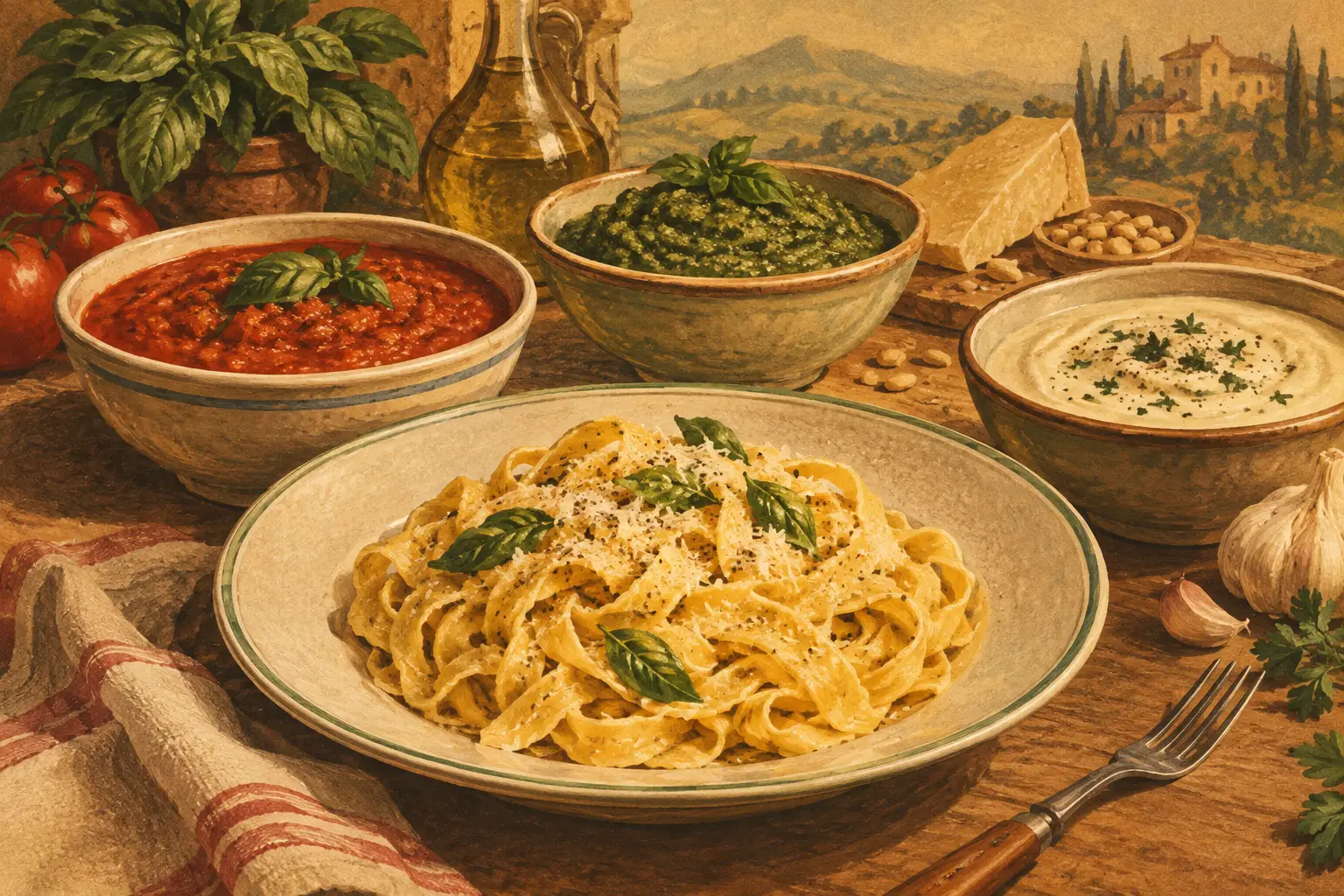
A plate of pasta needs very little when the ingredients are at their best. Sweet peas just out of their pods, peppery rocket, glossy tomatoes warmed by the sun, porcini with their deep woodland perfume: seasonal menus give simple Italian cooking its reason to shine. They let a dish taste of a particular week, not simply of a recipe repeated all year.
For diners, that means more than a change on the blackboard. It is the pleasure of returning to a familiar local table and finding something new to enjoy with a glass of wine. For cooks, it is a way of respecting ingredients enough not to overcomplicate them.
Seasonal menus start with the ingredient
Italian food has always understood that the finest cooking often begins with restraint. When an artichoke is tender, a tomato properly ripe or a squash full of sweetness, the job is not to bury it beneath too many flavours. Good olive oil, garlic, a little chilli, herbs, cheese and careful cooking can be enough.
Cooking with the seasons brings that clarity to the plate. Spring offers asparagus, broad beans, peas and young greens. Summer calls for tomatoes, courgettes, aubergines and basil. Autumn gives us wild mushrooms, pumpkin, chestnuts and figs, while winter makes room for bitter leaves, slow-cooked ragùs, citrus and warming baked dishes.
There is no need to force a summer-style pasta through February, nor make every winter meal heavy. A seasonal approach is about responding to what is good now. Some days that might mean a bright lemony sauce; on others, it means a bowl of pasta with a long-simmered sauce that asks for a generous red wine beside it.
Fresh pasta has a different conversation each season
Freshly made pasta is wonderfully adaptable because its gentle flavour and tender texture give seasonal ingredients room to speak. Delicate ravioli can carry ricotta with spring vegetables, while wider ribbons are made for a rich mushroom sauce or a slow-cooked ragu when the evenings draw in.
Shape matters, but so does balance. A fine pasta with clams, chilli and parsley needs freshness and restraint. A potato gnocchi dish benefits from something earthy or buttery, perhaps sage, squash or a little blue cheese. The aim is not to make every plate elaborate. It is to pair the pasta with a sauce that feels right for the moment.
That is why changing dishes through the year is so rewarding. A familiar pasta can reveal a completely different character with each season’s produce. Diners get variety without losing the comforting pleasure of a bowl made properly.
Why seasonal menus taste better
Produce picked closer to its natural moment has a better chance of arriving with its flavour intact. This is especially noticeable with ingredients that can be disappointing out of season: watery tomatoes, fibrous asparagus, bland berries or courgettes that have travelled too far and sat too long.
Seasonality does not guarantee perfection by itself. A skilled supplier and a careful kitchen still matter enormously. British weather is unpredictable, harvests vary, and some Italian ingredients are at their best when sourced from their own regions. But working seasonally gives the kitchen a useful discipline: buy well, taste often and let availability guide the menu rather than treating ingredients as interchangeable commodities.
It also creates a more honest kind of value. Instead of relying on expensive out-of-season produce that has little flavour, a kitchen can make the most of ingredients that are plentiful and beautiful. A generous bowl of pasta with proper seasonal vegetables can feel both special and reassuringly straightforward.
For guests, this is often what makes a meal memorable. You may not recall every component of a dish months later, but you remember the first sweet tomatoes of summer, the scent of truffle in autumn, or the particular comfort of a rich sauce on a cold Richmond evening.
A reason to come back to the table
A menu that shifts with the seasons gives regulars a reason to return. There is comfort in knowing that the welcome, the pasta and the house style will be there. There is excitement in seeing what has changed.
This matters in a neighbourhood restaurant. A local meal should not feel like an identical transaction every time. It should feel personal: a table for two after work, a long lunch with friends, a family supper, or a birthday gathering where everyone stays for one more bottle. Seasonal dishes give those occasions their own character.
At L’assaggino, that spirit sits naturally alongside rustic Italian starters, freshly made pasta and a considered wine list. A lively seasonal special can start the conversation at the table, while a favourite classic remains there for the person who already knows exactly what they fancy. The best menus make space for both.
Wine changes with the food
Seasonality is not confined to the kitchen. It affects what feels good to drink, too. Crisp whites and chilled rosé are natural companions for lighter spring and summer dishes, especially seafood, courgettes, peas and fresh herbs. As the year turns, a fuller white, a savoury red or a bottle with a little more age can suit mushrooms, game, braised meats and richer sauces.
There are no hard rules, of course. A bright red can be excellent slightly chilled in summer, and a glass of elegant white can lift a creamy winter dish. The pleasure lies in choosing a wine that meets the food rather than overwhelms it. A friendly recommendation from the team is often more useful than a page of formal tasting notes.
The trade-off: favourites versus change
There is a small challenge in seasonal cooking. Guests have dishes they love, and rightly so. Removing a favourite entirely can feel disappointing, particularly when it has become part of someone’s usual order.
The answer is not constant reinvention for its own sake. A good seasonal menu keeps a recognisable heart: dependable pasta, welcoming flavours and dishes made with care. Around that core, specials can move with the market and the weather. That balance means diners can order the comforting classic they came for or try something that may only be available for a few weeks.
It also asks for a little openness from the guest. The dish you enjoyed in July may not appear in December, but its replacement can offer a different kind of pleasure. Eating seasonally is an invitation to notice the year as it passes, one lunch or dinner at a time.
Seasonal menus make gatherings feel more generous
For group dinners and celebrations, a seasonal menu gives the occasion a sense of place. A spring party can begin with fresh, colourful antipasti and finish with something light. An autumn gathering may suit richer starters, handmade pasta and a dessert with pears, chocolate or citrus. At Christmas, the table can be festive without losing the generosity and simplicity that make Italian food so welcoming.
Bespoke menus work best when they follow the same principle. Start with what is excellent and available, then shape it around the guests, the occasion and the mood of the room. This is more rewarding than a fixed formula because it feels considered rather than manufactured.
The next time you choose where to eat, look for the small signs of the season: a special written with confidence, herbs that smell alive, a pasta dish that makes sense for the weather, and a wine suggestion that sounds genuinely tempting. Those details are often where a relaxed dinner becomes one you talk about long after the plates have been cleared.